
Correct pump sizing
We evaluate the duty point, total head, solids, run hours and suction conditions before recommending a submersible pump.
Sando Rotary designs and manufactures rugged submersible pumps for dewatering, sewage, slurry, wastewater, chemical effluent and industrial sump duties. Get the right pump selected by flow, head, solids, liquid compatibility and site conditions.
Sando Rotary helps plant teams select submersible pumps that match site reality, not just catalogue numbers.
A good submersible pump must keep running while fully immersed, often in abrasive, dirty or chemically difficult liquids. That is why the right selection starts with the liquid, the required flow, total head, cable length, installation depth, solids size, duty cycle and material compatibility.
As an industrial submersible pump manufacturer in India, Sando Rotary supports pump selection for wastewater treatment plants, chemical effluent sumps, construction dewatering, mining pits, municipal sewage stations and manufacturing facilities.
Ranking is useful, but reliable pump performance comes from selection discipline, material compatibility and service support.
We evaluate the duty point, total head, solids, run hours and suction conditions before recommending a submersible pump.
Wetted parts are selected according to corrosion, abrasion, temperature and chemical exposure, reducing premature failures.
Our team supports commissioning guidance, service planning and spares coordination for long-term pump operation.
Products are positioned for manufacturing plants, WTP/STP/ETP sites, mining, chemical, marine and infrastructure projects.
Submersible pump selection can account for sewage, sludge, drain water, process waste, slurry and sump liquid conditions.
Send your duty details and our team can guide flow, head, MOC and model selection for your application.
A submersible pump is installed inside the liquid. Because the pump is already submerged, it pushes liquid through the discharge line with high reliability and avoids suction-priming problems common in surface-mounted pumps.
The electric motor is sealed inside a watertight housing. When power is supplied, the motor rotates the shaft and impeller. The impeller increases liquid velocity, and the pump casing converts that velocity into pressure so the liquid moves upward or outward through the discharge connection.
The surrounding liquid helps cool the motor during operation. That is why proper level control, cable protection, seal condition and motor protection are important in industrial submersible pump installations.
Water, sewage, slurry or effluent enters through the strainer or suction opening near the bottom of the pump.
The rotating impeller accelerates the liquid. Vortex, channel or other impeller styles are selected based on solids and clogging risk.
The casing directs the liquid into the discharge pipe. Total head includes vertical lift, pipe friction, bends, valves and outlet pressure.
Thermal protection, level controls, moisture monitoring and correct panel settings help prevent dry running, overload and seal damage.
The best submersible pump for an application depends heavily on the liquid. MOC selection protects uptime and service life.
General industrial water, drainage, sewage and non-corrosive wastewater duties.
Stainless steel option for cleaner water and mildly corrosive industrial liquid.
Selected for stronger corrosion resistance in chemical effluent and chloride exposure.
Premium construction for aggressive, marine or high-chloride environments.
One pump type, many site realities: clean water, dirty water, sludge, slurry, sewage and corrosive effluent all need different engineering decisions.
Basements, trenches, pits, tunnels, rainwater accumulation and site drainage.
Wastewater transfer, sludge movement, effluent sump emptying and treatment plant duties.
Corrosive liquid handling with SS304, SS316L or super duplex after compatibility review.
Pit drainage, slurry sumps, abrasive water and solids-laden process streams.
Sewage lift stations, stormwater pumping and drainage infrastructure.
Bilge, dock, seawater and utility sump applications with suitable corrosion protection.
Review available models or contact our engineering team for model selection based on flow, head, MOC and site details.

Compact and efficient portable submersible pumps for easy handling of water, wastewater, and light slurry across domestic, industrial,…
View specifications
A Dewatering Submersible Pump is a high-performance pump designed to efficiently remove unwanted water from construction sites, mines,…
View specifications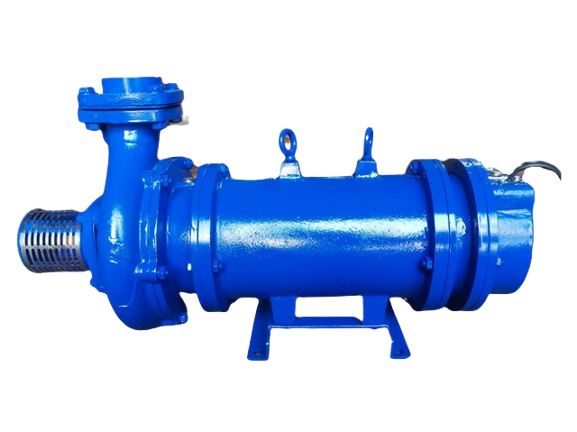
Openwell Submersible Pumps are high-efficiency centrifugal pumps designed to operate fully submerged in open wells, tanks, and reservo…
View specifications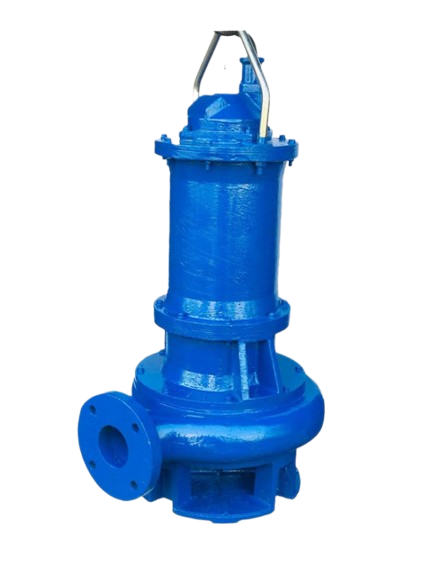
A Sewage Submersible Pump is a robust pump designed to operate underwater for transferring sewage, wastewater, and liquids containing …
View specificationsUse these performance tables as a first reference for dewatering, openwell, portable and sewage pump selection. Final model selection should be confirmed with flow, head, liquid and site data.

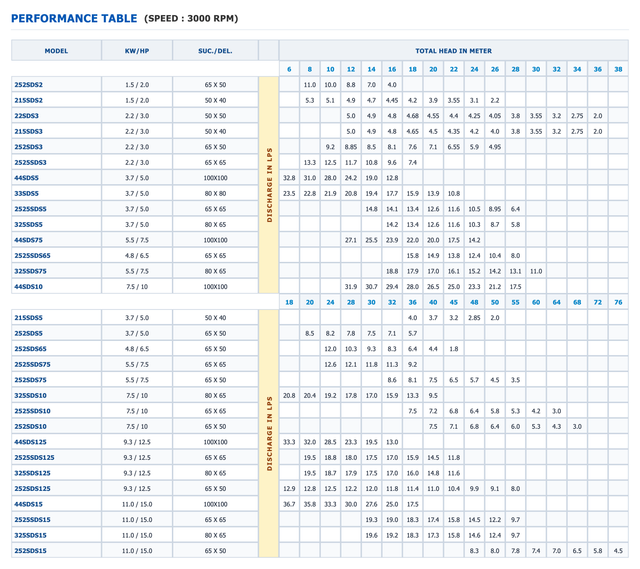
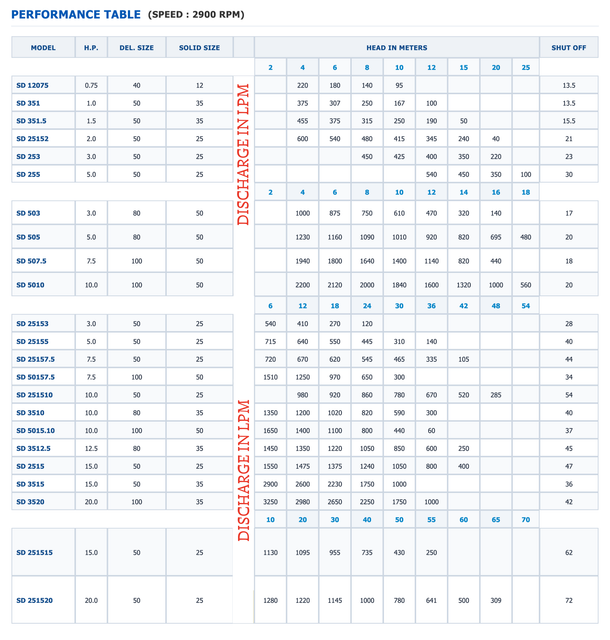
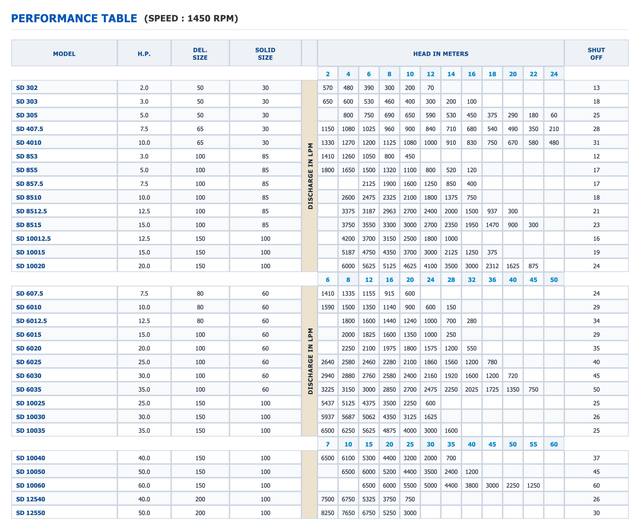
Click any performance table to open a larger view. Share the required LPM, head, phase, liquid and solids details with Sando Rotary for accurate pump selection.
This quick guide helps customers search beyond “best manufacturer” and focus on the correct pump construction for the duty.
Best for clean or lightly dirty water, construction pits, stormwater, trenches and temporary drainage where fast water removal is the main goal.
Best for tanks, wells, reservoirs and continuous water transfer where the pump remains submerged and needs stable flow.
Best for maintenance teams, emergency drainage, rental use and flexible movement between multiple sumps or sites.
Best for wastewater with soft solids, sludge and sewage where clog resistance and solids passage are more important than clean-water efficiency.
| Pump type | Typical liquid | Selection focus | Best suited for | Common MOC direction |
|---|---|---|---|---|
| Dewatering | Rainwater, groundwater, construction water | Flow, head, portability, cable length and duty cycle | Basements, pits, construction sites, stormwater drainage | Cast iron or stainless steel |
| Openwell | Clear water, tank water, well water, reservoir water | Submergence, flow stability, vertical lift and continuous operation | Water transfer, tanks, open wells, utility water circulation | Cast iron, SS304 or SS316L |
| Portable | Clean water, light drainage water, maintenance sump water | Weight, hose connection, ease of movement, quick setup and cable length | Emergency drainage, site maintenance, rental and temporary pumping | Cast iron, aluminum or stainless steel depending on duty |
| Sewage and wastewater | Dirty water, sewage, STP/ETP wastewater | Solids size, clogging risk, impeller type and motor protection | Lift stations, sewage sumps, wastewater transfer, sludge handling | Cast iron, SS304 or SS316L |
| Chemical effluent | Acidic, alkaline or chloride-rich liquid | pH, concentration, temperature and compatibility | Chemical plants, ETP sumps, marine and corrosive wastewater | SS316L or super duplex |
| Slurry and sludge | Solids-laden water, sludge, abrasive media | Abrasion, solids concentration, impeller clearance and service access | Mining pits, process sludge, abrasive wastewater and settled solids | Duty-specific metallic construction |
Send your duty point, liquid details, solids size and installation conditions. Sando Rotary can recommend a suitable submersible pump construction for your plant, project or OEM requirement.
Helpful answers for engineers and purchase teams comparing submersible pump manufacturers in India.
Sando Rotary Equipments PVT LTD manufactures industrial submersible pumps in India for dewatering, sewage, slurry, wastewater, chemical effluent and process sump duties, with support for pump sizing and material selection.
Look for application study, correct flow and head selection, MOC guidance, motor protection, solids-handling understanding, documentation, spares and after-sales support. The right manufacturer should help you avoid under-sized, over-sized or chemically unsuitable pumps.
Sewage and wastewater applications usually need a rugged pump with suitable impeller design, solids-handling capacity, submerged-duty motor protection and compatible wetted materials. Final selection depends on flow, head, particle size, sump design and operating hours.
Yes, SS304, SS316L and super duplex constructions can be selected for corrosive liquids after reviewing the chemical name, pH, concentration, temperature, chloride content and abrasion level.
Share the required flow rate, total head, liquid name, temperature, pH, viscosity, solids size, sump depth, discharge pipe size, power supply, run hours and preferred material of construction.
A submersible pump works while fully submerged. The sealed motor rotates the impeller, the liquid enters through the intake, and pressure generated inside the casing pushes the liquid through the discharge pipe.
Dewatering pumps remove clean or lightly dirty water from pits and sites. Openwell pumps are used in wells, tanks and reservoirs. Portable pumps are selected for temporary or emergency movement. Sewage pumps handle wastewater with solids and clogging risk.
Most submersible pumps should not run dry for long because the liquid helps cool the motor and protect the seal area. Use level switches, float switches or dry-run protection where sump levels can fall quickly.
Vortex impellers reduce clogging risk, channel impellers can be more efficient when solids can pass through, and cutter designs are useful when fibrous matter needs to be reduced before discharge. Selection depends on solids type, size and concentration.
Maintenance includes checking cable condition, insulation resistance, mechanical seals, oil chamber, impeller wear, bearings, vibration, current draw, flow performance and control panel protection at planned intervals.
For construction dewatering, choose based on water volume, vertical lift, hose length, solids or sand content, portability, available power supply and expected running hours. A portable dewatering pump is often preferred for temporary sites.
ETP and STP applications usually require wastewater or sewage submersible pumps selected for solids handling, pH, corrosion risk, sump depth, head, flow and operating hours. SS316L or super duplex may be needed for corrosive effluent.